
Miso Ramen Recipe with Pork Mince for Weeknights

This miso ramen recipe is written for a weeknight. Carton stock fortified with dried shiitake takes the place of bones simmered all day, and pork mince fried with ginger and garlic stands in for braised pork belly. Four bowls take about 45 minutes, with one large pot for the broth and a couple of saucepans for the eggs and noodles.
The vegetarian version further down keeps the same method and swaps in tofu, fresh mushrooms and vegetable stock, so a mixed table can eat much the same meal.
What This Miso Ramen Recipe Makes
Miso ramen is wheat noodles in a broth seasoned with fermented soybean paste. It is closely tied to Sapporo in northern Japan, and the city’s tourism association dates the first miso ramen to 1958. The broth is cloudy, savoury and a little sweet, and it suits toppings with plenty of flavour of their own.
Our shortcut version works in three layers. The pork browns first and leaves its flavour on the base of the pot. The stock picks that up along with the mushroom liquid. Miso and tahini go in last, giving salt, body and a creamy look without any cream.
If noodle soup is a regular at your place, the Malaysian chicken laksa recipe is the coconut and spice relative, and our Chinese chicken and corn soup is the mild one.
Ingredients
Serves 4. Spoon measures are Australian, so 1 tablespoon is 20 mL and 1 teaspoon is 5 mL.
For the quick stock base
- 15 g dried shiitake mushrooms (about 8)
- 250 mL (1 cup) boiling water
- 1 L (4 cups) salt-reduced chicken stock
- 500 mL (2 cups) water
For the pork
- 1 tablespoon (20 mL) neutral oil, such as canola or rice bran
- 400 g pork mince
- 4 spring onions, white and green parts thinly sliced and kept separate
- 4 garlic cloves, finely chopped
- 1 tablespoon finely grated fresh ginger
- 2 teaspoons sambal oelek or other chilli paste
- 1 teaspoon caster sugar
For the miso seasoning
- 90 g (1/3 cup) white (shiro) miso paste
- 2 tablespoons (40 mL) hulled tahini
- 1 tablespoon (20 mL) soy sauce
- 2 teaspoons toasted sesame oil
For the bowls
- 4 eggs (about 59 g each)
- 2 bunches baby bok choy (about 300 g), quartered lengthways
- 160 g (1 cup) frozen corn kernels
- 360 g dried ramen noodles
- 20 g butter, cut into 4 pieces
- 2 teaspoons toasted sesame seeds

Ingredient Notes, Swaps and a Vegetarian Version
| Ingredient | What it does | Swap |
|---|---|---|
| White miso | Salt and mild sweetness | 60 g red miso, which is stronger and saltier |
| Tahini | Creamy body | Japanese sesame paste or smooth unsalted peanut butter |
| Dried shiitake | Savoury depth | 150 g fresh mushrooms fried with the pork, plus 250 mL more water |
| Pork mince | Topping and broth flavour | Chicken mince, also cooked to 75C |
| Sambal oelek | Gentle heat | 2 teaspoons gochujang, or leave it out |
| Dried ramen | Chewy wheat noodles | 600 g fresh ramen or hokkien noodles |
| Bok choy | Fresh crunch | Shredded wombok or a handful of baby spinach per bowl |
Use salt-reduced stock, because the miso and soy bring plenty of salt on their own. Homemade stock is welcome, and our homemade bone broth gives a richer bowl.
Better Health Channel advises using raw mince within three days and storing it in the coldest part of the fridge.
To make it vegetarian:
- Replace the chicken stock with salt-reduced vegetable stock. A 10 cm piece of kombu, simmered in step 5 and lifted out before the miso goes in, adds depth.
- Replace the pork with 200 g finely chopped Swiss brown mushrooms and 300 g firm tofu, patted dry and crumbled. Fry the mushrooms for 4 minutes until their liquid has gone, add the tofu and cook for 6 minutes until golden, then carry on with the spring onion whites and seasonings.
- Read the labels. Some miso pastes include dashi, which is commonly made with fish, and some noodles contain egg.
- For a vegan bowl, also leave out the eggs and butter.
For equipment, a 5 L stockpot or casserole and two saucepans of different sizes will cover it. A fine grater from our peeling and grating tools makes quick work of the ginger.
Method
- Put the shiitake in a heatproof bowl, pour over the boiling water and soak for 15 minutes while you prepare everything else. Lift out the mushrooms, squeeze them over the bowl, discard the stems and slice the caps. Keep the soaking liquid.
- Bring a 2 L saucepan of water to a gentle boil. Lower in the eggs and cook for 8 minutes, until the whites are firm and the yolks have thickened. Move them to a bowl of cold water for 5 minutes, then peel.
- Heat the oil in a 5 L pot over medium-high heat. Press in the pork and leave it for 2 minutes, then break it up and cook for 5 minutes more, until crumbly and golden at the edges and 75C when you probe a mound of it. Add the spring onion whites, garlic, ginger, sambal oelek and sugar and stir for 1 minute, until fragrant.
- Spoon about two thirds of the pork into a bowl and cover it. Leave the rest in the pot.
- Pour in the stock, the 500 mL water and the shiitake liquid, stopping before any grit at the bottom of the bowl. Add the sliced shiitake and scrape the base of the pot. Bring to the boil, then half cover, turn the heat to low and simmer for 10 minutes.
- While the broth simmers, bring a 4 L saucepan of unsalted water to the boil. Cook the bok choy and corn for 1 minute, until the leaves are bright green, and lift out with a wire strainer. Cook the noodles in the same water for the time on the packet, usually 3 to 4 minutes, then drain well.
- Put the miso, tahini, soy sauce and sesame oil in a heatproof bowl. Whisk in 125 mL (1/2 cup) of the hot broth until smooth. Take the broth off the heat and stir the miso mixture through. Do not let it boil again.
- Divide the noodles among four deep bowls of about 1 L each. Ladle over the broth and shiitake, then top with the reserved pork, bok choy, corn, halved eggs and a piece of butter. Finish with the spring onion greens and sesame seeds and serve straight away.
Two points on safety. The Food Safety Information Council says minced meat needs to reach 75C, so push the crumbles together and check the centre of the mound with a probe from our kitchen thermometers range. And when serving small children, pregnant women, older people or anyone with a weakened immune system, follow the council’s advice on cooking eggs, which is to keep going until the yolk has started to become firm. Give theirs 11 minutes.

Make Ahead, Storage and Reheating
The broth and pork can be made the day before. Take the recipe to the end of step 5, leave out the miso, and chill the broth and the reserved pork in separate containers. Cook the eggs, vegetables and noodles just before you eat.
The council’s advice for big pots of soup is to split them into portions about the size of a takeaway container and refrigerate or freeze them as soon as they stop steaming. Keep the fridge at 5C or below.
- Fridge: use or freeze broth and pork within two to three days. Keep noodles apart from the broth or they will swell and go soft. The council sets the same limit for cooked pasta in the fridge, and we would treat noodles the same way.
- Freezer: freeze the broth without miso, and the pork on its own. The council says frozen portions keep for several months.
- Reheating: bring broth and pork to at least 75C and steaming hot throughout. Broth that already holds miso can be heated to that point over medium-low heat without boiling. Reheat once only.
Common Problems and How to Fix Them
- The broth is too salty: miso brands differ a lot. Start with 60 g, taste, then add the rest. If it has gone too far, stir in up to 200 mL of hot water.
- The broth is grainy: the miso or tahini went in without being loosened, or the pot boiled afterwards. Strain it, or blend it briefly with a stick blender.
- The broth tastes flat: the base of the pot was not scraped, or the pork was pale. A little more soy sauce, or half a teaspoon of sambal oelek, will lift it.
- The pork is grey and wet: the pan was too cool. Let the liquid cook off before stirring again.
- The noodles are clumped: they sat too long. Drain them last and have the bowls lined up. A quick rinse under hot water loosens them.
- The bowl goes cold quickly: fill the bowls with hot water while the noodles cook, then empty them just before serving.
Frequently Asked Questions
Can I use instant noodles in this miso ramen recipe?
Yes. Use four cakes, throw away the flavour sachets and cook them for a minute less than the packet says, because they soften fast in hot broth. Leftover noodles are also good in a stir-fry such as our chicken and hokkien noodles.
Why should miso not be boiled?
Boiling dulls the aroma and can make the paste separate into fine grains. Loosening it with a ladle of hot broth and stirring it through off the heat keeps the soup smooth.
Is white or red miso better for ramen?
Either works. White miso is mild and slightly sweet, so it is the easier starting point. Red miso is aged for longer and tastes saltier and stronger. Mixing 45 g of white with 30 g of red gives a middle ground.
Can I make the broth without tahini?
You can. The soup will be thinner and clearer but still well seasoned. Smooth peanut butter is the closest swap, or add another teaspoon of sesame oil for aroma alone.
What can I serve with miso ramen?
A bowl is a full meal, so keep sides small: steamed edamame, quick-pickled cucumber or a few dumplings. If you are planning the week around pantry dinners, smoky beef and bacon bolognese and creamy tuna mornay are two more to add to the list.
Chefs Toolbox editorial team
Gear to compare


Keep reading
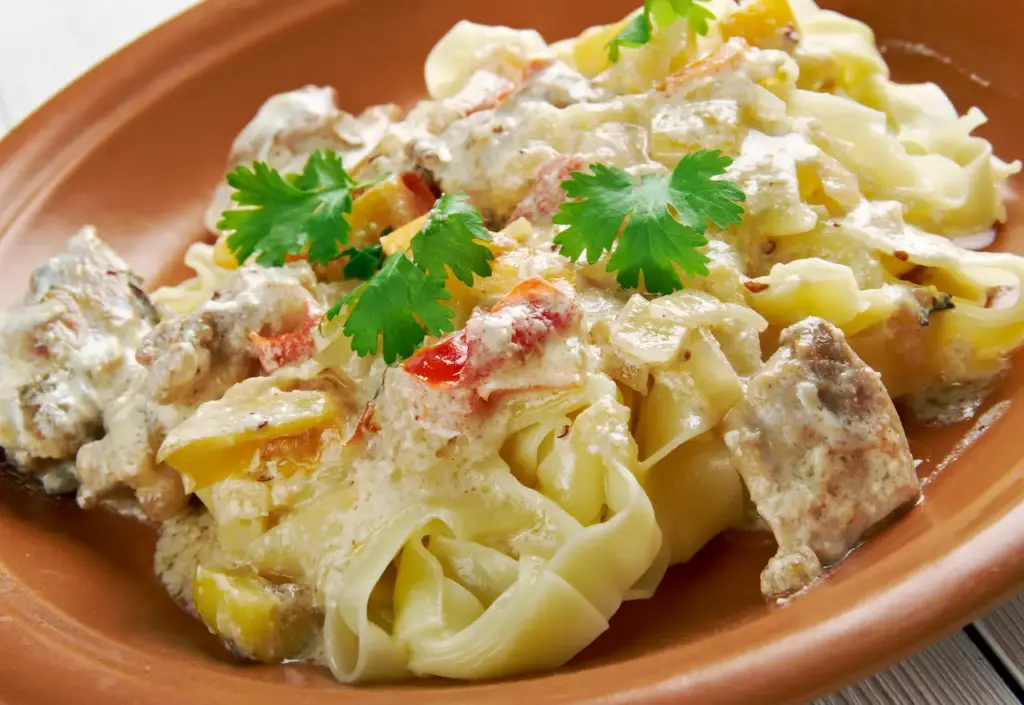 Pasta RecipesPressure Cooker Chicken CarbonaraPressure Cooker Chicken Carbonara. This recipe includes chicken in the pasta to make a filling and hearty meal that is also full of flavor.
 Pasta RecipesSmoky Beef and Bacon Bolognese with Smoked PaprikaSmoky beef and bacon bolognese for six, built on rendered bacon, browned mince and smoked paprika, with swaps, storage advice and fixes for problems.
 Pasta RecipesCreamy Chicken Pasta Bake with Mushrooms and SpinachCreamy chicken pasta bake with thigh fillets, mushrooms, spinach and mozzarella. Timed method, dish sizes, swaps, make-ahead steps and safe storage.